
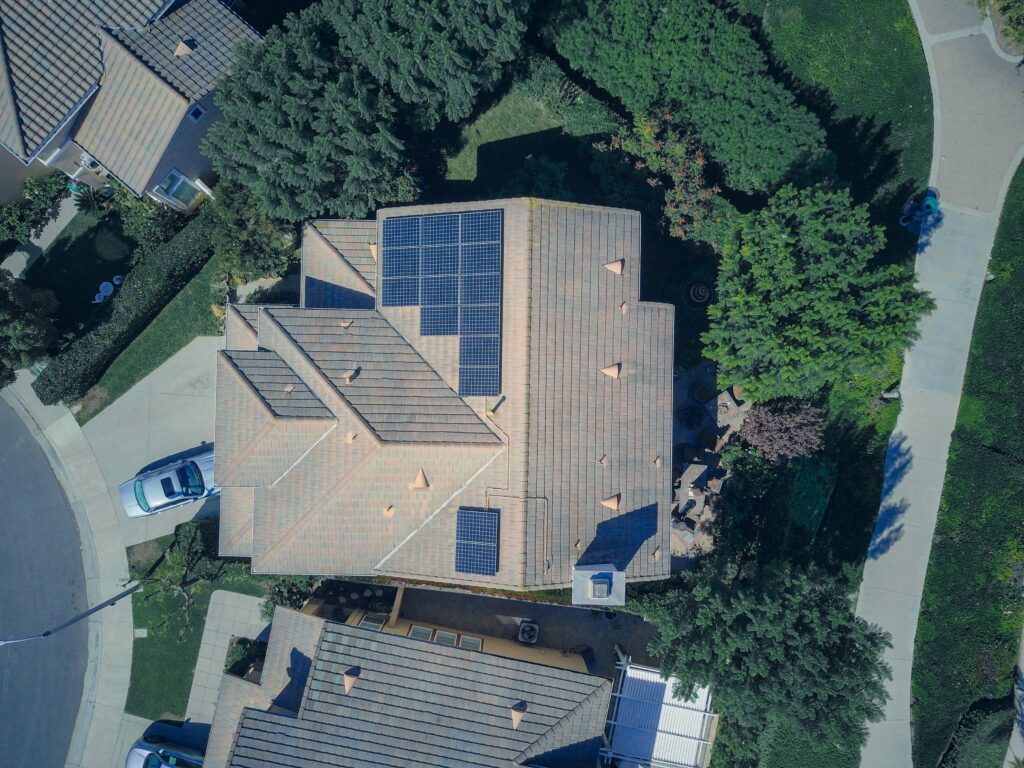
If you’ve already got solar panels — or you’re thinking about getting them — the battery question comes up pretty quickly. Do you need one? Is it worth the upfront cost? Will it actually save you more money, or is it just a nice-to-have?
These are fair questions, and the honest answer is: it depends on your household. But for most homeowners in Northern Beaches and North Sydney, the shift in energy prices and feed-in tariffs over the past few years has changed the maths significantly. Understanding what’s actually happening with your solar energy during the day is the first step to figuring out whether battery storage makes financial sense for you.
The direct answer: In most cases, a solar and battery system saves more money over the long term than solar alone — particularly for households that use energy in the evenings, are on time-of-use tariffs, or want independence from rising grid costs. But a battery isn’t the right call for every situation, and the upfront investment needs to stack up against your actual usage patterns.
Understanding Solar-Only vs Solar + Battery Systems
A solar-only system generates electricity from sunlight during the day. Any power your panels produce that you use immediately offsets what you’d otherwise buy from the grid — and that’s a genuine saving. The problem is that solar panels generate the most power when most households need it least: mid-morning to mid-afternoon, when people are typically at work or school.
Any surplus electricity your panels generate gets exported to the grid. In theory, you earn a feed-in tariff for that export. In practice, those rates have dropped substantially across New South Wales in recent years — to the point where the value of exported energy is a fraction of what you’d pay to import it.
This is the fundamental inefficiency that battery storage for solar panels addresses. Instead of sending cheap surplus power to the grid during the day, a battery stores it. You then draw from that stored energy in the evening — when grid electricity is at its most expensive — and avoid buying power at peak rates.
Solar battery backup also provides a level of resilience that solar-only systems can’t. Most standard solar systems shut down during a grid outage for safety reasons. A battery-backed system can keep critical loads running when the grid goes down.
Energy Costs in Northern Beaches & North Sydney: Why It Matters
Electricity prices in New South Wales have risen considerably over the past decade, and the Northern Beaches and North Sydney areas are subject to the same pressures. Most households in these areas are on time-of-use tariffs, where the cost per kilowatt-hour varies significantly depending on when you use it. Peak rates — typically in the late afternoon and evening — can be two to three times more expensive than off-peak rates.
This pricing structure is actually good news for solar battery owners. A battery charged during solar generation hours (off-peak or shoulder) and discharged during the evening peak delivers maximum financial benefit. The greater the spread between what you’re paid for exported power and what you pay for peak-rate power, the stronger the case for home battery storage.
Solar Battery vs No Battery: Which Saves You More?
Let’s look at this simply. A typical household in North Sydney without a battery might self-consume around 30–40% of the solar energy their panels generate. The rest is exported to the grid at low feed-in tariff rates. With a battery, self-consumption can rise to 70–90%, meaning far more of the free energy your panels generate is actually used in your home rather than sold back at a loss.
On a practical level: if your electricity retailer charges 30–35 cents per kilowatt-hour at peak times and pays you 5–8 cents for exported solar, every unit of stored solar energy you use in the evening instead of buying from the grid saves you roughly 25 cents. Over the course of a year, across thousands of kilowatt-hours, that accumulates.
Solar battery savings vary by household size, consumption patterns, and system capacity — but payback periods for well-matched systems in Sydney typically fall somewhere between 7 and 12 years, with batteries lasting 10–15 years or more. After payback, the savings are effectively pure return.
The solar battery cost in Australia has also dropped significantly over the past five years, making entry-level home battery systems more accessible than they were even in 2020.
Why Homeowners Are Choosing the Tesla Powerwall 3
Among available home battery products, the Tesla Powerwall 3 has become one of the most discussed options for Australian households — and for good reason. It integrates solar inverter functionality directly into the unit, simplifying the overall system design and reducing installation complexity. This integration also means better performance monitoring through the Tesla app, giving homeowners real-time visibility of their energy flows.
The Powerwall 3 offers 13.5 kWh of usable capacity, which is well-suited to a medium-to-large household. It supports whole-home backup, meaning that in the event of a grid outage, it can power your entire home — not just a few designated circuits. It also supports stacking, so households with higher energy demands can add multiple units.
For households that are also considering an EV, the Powerwall 3 integrates naturally into a broader home energy ecosystem. If you’re in the process of preparing your home for EV charging, a home battery system makes that transition significantly more cost-effective — your car charges on stored solar rather than drawing from the grid overnight.
When Does a Battery Make Financial Sense?
A battery is likely to deliver strong returns if:
- You use most of your energy in the evenings. Households where adults work during the day and energy consumption peaks after 5pm are the ideal profile for battery storage. The battery absorbs daytime solar and discharges it exactly when you need it.
- You’re on a time-of-use tariff. The larger the gap between your peak import rate and your feed-in tariff, the stronger the case for a battery. Check your electricity bill — if you’re paying substantially more per kilowatt-hour during peak hours, a battery should be on your radar.
- You want backup power. Grid reliability in parts of the Northern Beaches and North Sydney is generally good, but storm season and infrastructure works do cause outages. If having the lights and refrigerator on during an outage matters to you, solar battery backup power is worth the premium.
- You’re planning other electrification. If you’re moving toward an all-electric home — induction cooking, heat pump hot water, EV charging — your energy demand will increase. A battery helps absorb and redistribute solar generation to offset that demand rather than relying on the grid.
Are solar batteries worth it if you’re rarely home during the day and use minimal power in the evenings? Less so. If your consumption is low and your solar system is already well-matched to your daytime use, the payback period extends and the financial case weakens.
Choosing the Right Setup for Your Home
The best approach is a system sized to your actual household consumption — not the largest battery you can fit or the smallest you can afford. An undersized battery fills up quickly and still forces you onto the grid in the evening. An oversized one cycles less frequently and takes longer to pay back.
Start by pulling three to six months of electricity bills and looking at your consumption patterns. How much do you use per day? When do you use it? Does your current solar system cover your daytime needs already?
For homeowners who want to go further, smart home systems for modern homes can automate when appliances run, optimise battery charging and discharging around tariff windows, and give you full visibility of your energy flows — all of which compound the financial benefit of a solar-plus-battery setup.
Working with a qualified electrician who understands both solar and battery systems is essential. The design, placement, and integration of a battery affect both its performance and its safety. Getting it right from the start avoids costly corrections later.
For Northern Beaches and North Sydney households ready to take the next step, battery installation services in Northern Beaches & North Sydney provide local expertise and the technical capability to design a system around your home’s specific layout and energy needs.
The shift away from exporting cheap solar and buying expensive grid power is one of the clearest financial wins available to Sydney homeowners right now. A battery makes it possible.
Frequently Asked Questions
Is a solar battery worth it in Sydney? For most households that consume energy in the evenings or are on time-of-use tariffs, yes. A battery significantly increases the amount of solar energy used in-home, reducing dependence on expensive peak-rate grid power. Payback periods for well-matched systems in Sydney typically range from 7 to 12 years.
What is the best home battery for Australian homes? The Tesla Powerwall 3 is one of the most popular choices, offering 13.5 kWh of capacity, integrated solar inverter functionality, whole-home backup, and strong app-based monitoring. Other reputable options include the Sungrow SBR and BYD Battery-Box HVS range.
How much does a solar battery cost in Australia? Solar battery cost varies by brand and capacity. Entry-level systems start around $8,000–$10,000 installed, while larger or premium systems typically cost $14,000–$18,000 installed, depending on system complexity and location.
What happens to solar energy without a battery? Without a battery, surplus solar energy is exported to the grid at the feed-in tariff rate — which in NSW currently sits well below the cost of importing power. This means the financial return on unused solar generation is low. A battery stores that surplus for use when it’s most valuable.
Can a solar battery power my home during a blackout? Yes — if the system is configured for backup. Most modern home batteries support whole-home or partial-home backup during grid outages. Standard solar-only systems cannot operate during a blackout for safety reasons.
How long does a home battery last? Most home batteries are rated for 10–15 years or a set number of charge cycles, whichever comes first. The Powerwall 3, for example, carries a 10-year warranty. Battery capacity gradually degrades over time, similar to a smartphone battery, but good-quality units retain the majority of their capacity well into the warranty period.